|
LAST WEEK's WEBINAR Alberta's Sovereignty Challenge - HERE PRIOR WEEK When Democracies Stop Listening - HERE Editor - Perry Kinkaide Visit KEInetwork.net |
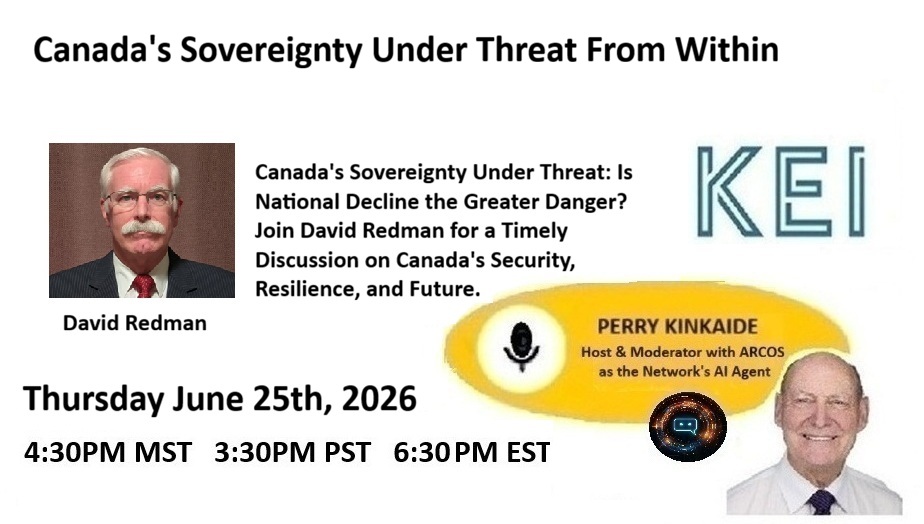
Canada's Sovereignty: Under Threat from Within? A Warning About National Decline Last week's KEI Network article, The Sovereignty Challenge: AI, Diversification and Commercialization, argued that sovereignty is more than a political concept. It is the practical capacity of a society to withstand shocks, adapt to change, and remain resilient in an uncertain world. Economic diversification, commercialization, and resilience were presented as essential foundations of sovereignty. This week's article continues that discussion from a different perspective. Retired Lieutenant-Colonel David Redman argues that sovereignty also depends upon strong institutions, national unity, military preparedness, economic security, and public confidence. In his view, the greatest threat to Canada's future may not come from external enemies, but from internal weaknesses that gradually erode the nation's capacity to govern and defend itself. Whether discussing Alberta's economic resilience or Canada's national security, the underlying question is remarkably similar: What conditions must exist for a society to control its own future? Join us for a special KEI Network webinar as we interview David Redman about sovereignty, security, preparedness, and the challenges facing Canada in an increasingly uncertain world. - Editor Note. Can Canada Save Itself? HERE was the KEI Network's newsletter (December 14th, 2025 (Issue #216) Also included HERE WOKE Has Strengthened Society is our Fact or Fiction companion. |
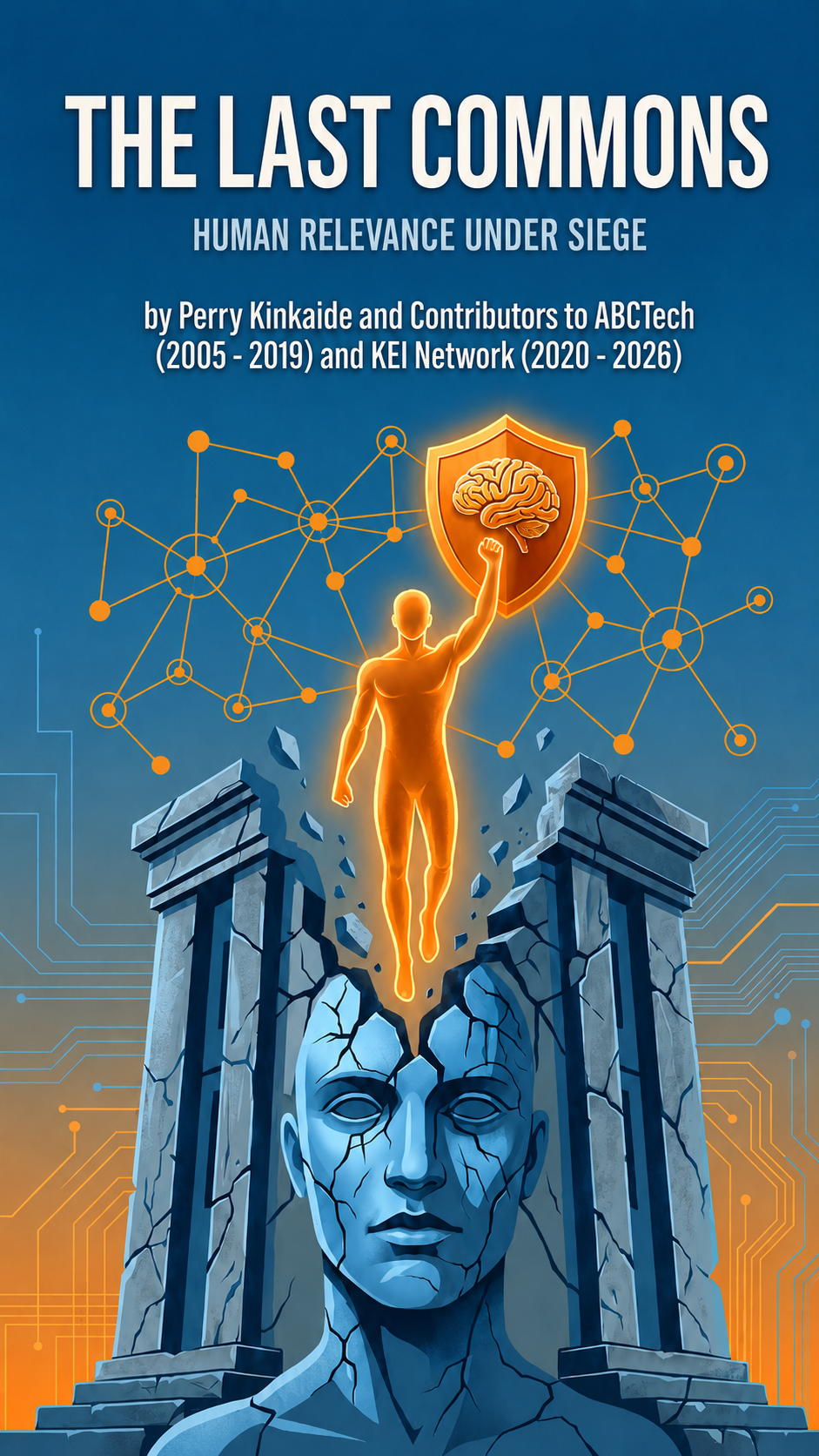
The Last Commons: Human Relevance Under Siege 20 years. 1,000 voices. ONE book. Be among the first to experience the audiobook and the book's fall release
This early release is being shared with the KEI Network, many of whom participated in the 20-year journey. You'll receive priority access as soon as it becomes available, along with the opportunity to share your reflections. |

|
Canada’s Sovereignty: Under Threat from Within – A Warning About National Decline Retired Lieutenant-Colonel David Redman has become one of the more outspoken voices warning that Canada’s greatest threat may not come from foreign invasion, but from internal weakness, institutional decline, and political drift. Drawing on his military background, emergency management experience, and numerous public essays, Redman argues that Canada is slowly weakening itself from within while failing to recognize the seriousness of a changing world. In essays and presentations, Redman repeatedly returns to one central theme: sovereignty is not simply protected by borders or treaties. It depends on national unity, strong institutions, credible defense, economic resilience, and public confidence. When those foundations erode, sovereignty weakens long before any external enemy arrives. Continued below
No need to register. Just Zoom in https://us02web.zoom.us/j/84258596166?pw.. Continued from above The Internal Problems Identified. Redman describes Canada as increasingly “fractured” and uncertain about its identity and purpose. He argues that the country has drifted away from shared national interests and become consumed by ideological divisions, symbolic politics, and short-term governance. Among the major internal concerns he raises are:
Redman argues that younger Canadians increasingly face a future defined not by optimism but by fear — fear of never owning a home, fear of rising costs, fear of social instability, and fear of losing freedom of expression. He sees these anxieties as symptoms of a country losing confidence in itself. He is especially critical of what he considers the erosion of Canada’s military readiness. In several articles, Redman claims the Canadian Armed Forces have become underfunded, demoralized, and increasingly incapable of defending Canadian interests at home or abroad. He warns that allies are beginning to see Canada as unreliable and strategically irrelevant. Sovereignty Requires More Than Geography. A recurring argument in Redman’s writing is that sovereignty is not guaranteed simply because Canada exists on a map. A sovereign country must be capable of defending its borders, enforcing its laws, securing its economy, and maintaining national cohesion. Otherwise, stronger powers naturally begin shaping its future. This concern became especially pronounced in his response to the latest U.S. National Security Strategy. Redman argued that while the United States clearly defines and pursues its national interests, Canada appears uncertain about its own. He criticized Ottawa for lacking a coherent national security strategy grounded in practical realities rather than rhetoric. According to Redman, Canada risks becoming strategically dependent on allies while simultaneously neglecting the responsibilities that sovereignty demands. The Six National Interests. In speeches and presentations, including his “Breaking Point” lecture, Redman emphasizes the need for Canadians to openly define and defend their national interests. He argues that governments should organize policy around long-term national priorities rather than temporary political narratives. While different versions of his framework appear across his writing, his recommendations consistently stress:
Redman believes Canadians must again see themselves as citizens with shared obligations, not simply consumers of government services or members of competing identity groups. Preparedness, Not Panic. Although some critics view Redman’s language as alarmist or politically charged, his supporters argue that his warnings reflect legitimate concerns about institutional decay, defense readiness, and national resilience in an increasingly unstable world. What distinguishes Redman’s perspective is that he frames sovereignty as fundamentally tied to competence and preparedness. Countries that fail to maintain resilient institutions, strong defense, and social cohesion become vulnerable not only to military threats, but also to economic pressure, foreign influence, and internal fragmentation. His message is ultimately less about fear than about responsibility. Canada, he argues, still possesses enormous advantages: vast resources, democratic traditions, strategic geography, and an educated population. But without clarity of purpose and a renewed commitment to national interests, those advantages can erode surprisingly quickly. A Debate Canada May Need. Whether one fully agrees with David Redman or not, his arguments tap into a growing national conversation. Across the political spectrum, Canadians increasingly express concern about affordability, institutional trust, defense readiness, foreign interference, and social cohesion. Redman’s warning is that sovereignty is rarely lost all at once. More often, it weakens gradually through complacency, division, and the slow erosion of national confidence. By the time the danger becomes obvious, recovery is far more difficult. For Redman, the solution begins with an uncomfortable but necessary question: What does Canada stand for — and are Canadians still willing to defend it.
|